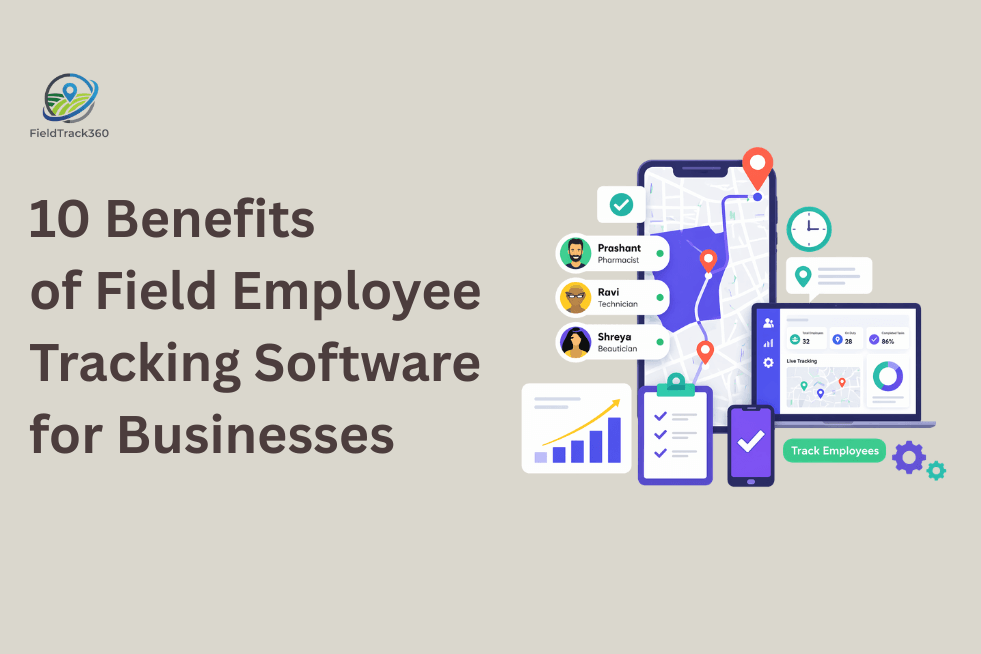
Field teams play a critical role in many businesses, from sales and distribution to on-site service and operations. However, managing these teams effectively is not always straightforward. Since most of the work happens outside the office, it becomes harder to understand how time is spent, how tasks are completed, and where inefficiencies exist.
As teams grow, these gaps become more visible. Missed updates, delays in task completion, and inconsistent reporting can start affecting overall performance. Without a clear system in place, managers often struggle to get a complete picture of daily operations.
This is one of the reasons why many businesses are adopting field employee tracking software. Instead of relying on scattered updates, they use a more structured approach to manage activities, track progress, and maintain consistency across teams.
In this article, we will break down the key benefits of field employee tracking software and how it helps businesses improve efficiency, gain better control over operations, and support their field teams more effectively.
1: Real Time Visibility into Field Activities
One of the biggest advantages of using field employee tracking software is the ability to see what is happening on the ground as work progresses. In many businesses, managers depend on periodic updates or end-of-day reports, which often provide an incomplete picture of daily activities.
This gap makes it difficult to understand whether tasks are being completed on time or if any delays need immediate attention.
With real time visibility, businesses can monitor employee movements, task status, and overall activity throughout the day. This does not mean constant supervision, but rather having access to accurate information when it is needed.
For example, if a field employee is delayed at one location, managers can quickly adjust schedules or reassign tasks to avoid further disruption. This level of awareness helps teams stay aligned and reduces the chances of missed or delayed work.
Over time, better visibility leads to more informed decisions, improved coordination, and smoother day-to-day operations.
2: Improved Employee Productivity
Productivity in field operations is not just about how many tasks are completed in a day. It also depends on how efficiently time is used throughout the day.
In many cases, productivity drops due to unstructured schedules, unnecessary travel, or time spent on activities that are not directly related to core tasks. These inefficiencies often go unnoticed because there is no clear way to measure how time is actually being spent.
Field employee tracking software helps address this by bringing more structure to daily work. With better visibility into schedules, task progress, and movement, businesses can identify where time is being lost and make adjustments accordingly.
For instance, when tasks are clearly assigned and tracked, employees can plan their day more effectively. Managers can also ensure that workloads are balanced and aligned with priorities.
As a result, employees are able to focus more on completing meaningful tasks, leading to better output without increasing workload.
3: Better Task Management and Execution
In field operations, assigning tasks is only one part of the process. Ensuring that those tasks are completed correctly and on time is where most challenges arise.
Without a structured system, tasks are often shared through calls or messages, which can lead to missed instructions, lack of clarity, or delays in execution. It also becomes difficult to track progress or verify whether the work has been completed as planned.
Field employee tracking software brings more order to this process by allowing businesses to assign tasks with clear details, deadlines, and priorities. Employees have a better understanding of what needs to be done, while managers can track progress without constant follow-ups.
For example, instead of checking in multiple times during the day, managers can view task updates directly within the system. This reduces communication gaps and helps teams stay aligned.
With better task management, businesses can ensure smoother execution, fewer missed activities, and more consistent outcomes across field teams.
4: Accurate Attendance and Work Hours Tracking
Tracking attendance for field employees can be challenging, especially when teams are constantly moving between locations. Traditional methods like manual check-ins or paper-based records often lead to inconsistencies and make it difficult to verify actual working hours.
This lack of accuracy can create confusion around employee availability, work duration, and overall performance evaluation.
Field employee tracking software helps solve this by enabling location-based attendance and automated time tracking. Employees can mark their attendance through the system, often linked with their real-time location, ensuring that records are both accurate and reliable.
For example, businesses can confirm when an employee starts their day, where they check in from, and how their time is distributed across different tasks or locations.
This level of accuracy not only simplifies attendance management but also creates a fair and transparent system for evaluating employee effort and performance.
5: Reduced Operational Costs
Field operations often involve significant expenses, especially when it comes to travel, fuel, and time management. Without proper planning and visibility, these costs can increase without delivering proportional results.
For example, inefficient routes, repeated visits, or poorly planned schedules can lead to unnecessary travel and higher fuel consumption. These small inefficiencies, when multiplied across teams and days, can have a noticeable impact on overall costs.
Field employee tracking software helps businesses identify and reduce these inefficiencies. By providing insights into movement patterns and task completion, it becomes easier to optimize routes and allocate tasks more effectively.
With better planning, employees can complete more work with less travel, which directly reduces operational expenses. At the same time, improved efficiency ensures that resources are used more effectively.
Over time, these optimizations contribute to cost savings while maintaining or even improving overall productivity.
6: Data Driven Decision Making
In many field operations, decisions are often based on assumptions or limited information. Managers may rely on verbal updates or summary reports, which do not always reflect what actually happens during the day. This makes it difficult to identify patterns, measure performance accurately, or plan improvements with confidence.
Field employee tracking software changes this by providing structured and consistent data. Instead of relying on scattered inputs, businesses can access detailed information about employee activities, task completion, travel patterns, and time usage.
For example, managers can identify which areas take longer to cover, which tasks are frequently delayed, or how workloads are distributed across the team. These insights make it easier to adjust plans and improve efficiency over time.
With access to reliable data, decision-making becomes more objective and less dependent on guesswork, leading to better outcomes across operations.
7: Increased Accountability Across Teams
In field operations, it is not always easy to maintain accountability, especially when employees are working independently across different locations. Without a clear system, it can be difficult to track responsibilities or understand who is handling which task at any given time.
This often leads to missed follow-ups, delays in execution, and confusion in coordination.
Field employee tracking software brings more transparency into daily operations. When tasks, locations, and updates are recorded within a system, it becomes easier to track progress and understand individual contributions.
Employees are more aware of their responsibilities, and managers have a clearer view of how work is being carried out. This reduces the need for constant follow-ups and helps create a more structured work environment.
Over time, this level of transparency encourages consistency and ownership, leading to better overall performance across teams.
8: Faster Reporting and Reduced Manual Work
Reporting is a necessary part of field operations, but it often becomes time-consuming when handled manually. Employees may need to prepare updates at the end of the day, fill out forms, or send multiple messages to share their progress.
This not only takes time but also increases the chances of missing or inconsistent information.
Field employee tracking software simplifies this process by automating how data is captured and shared. As employees complete tasks or move between locations, updates are recorded within the system without requiring separate reporting efforts.
For example, instead of compiling reports after finishing their work, employees can focus on their tasks while the system captures relevant activity in the background. Managers can then access this information in a structured format whenever needed.
By reducing manual reporting, businesses save time, improve accuracy, and ensure that information is available without delays.
9: Better Customer Service and Response Time
Field operations often have a direct impact on customer experience. Whether it is a service request, delivery, or client visit, delays or lack of coordination can affect how customers perceive your business.
In many cases, slow response times happen because teams do not have clear visibility into who is available, where they are, or how tasks are progressing. This can lead to missed opportunities or longer turnaround times.
Field employee tracking software helps improve coordination by providing real time updates on employee location and task status. This makes it easier to assign work to the nearest available employee or adjust schedules when needed.
For example, if a customer request comes in, managers can quickly identify the closest team member and assign the task without delay. This reduces response time and improves service efficiency.
With better coordination and faster execution, businesses are able to deliver a more reliable and consistent experience to their customers.
10: Scalability for Growing Businesses
As businesses expand, managing field operations becomes more complex. What works for a small team may not be effective when the number of employees, locations, and daily tasks increases.
Without a structured system, scaling often leads to challenges such as inconsistent processes, communication gaps, and difficulty in maintaining performance across teams.
Field employee tracking software provides a foundation that can support growth. With standardized workflows, centralized data, and clear visibility into operations, businesses can manage larger teams without losing control.
For example, as new employees are added, they can be onboarded into an existing system with defined processes, making it easier to maintain consistency. Managers can also monitor performance across multiple teams and locations without relying on fragmented information.
By creating a scalable structure, businesses can expand their operations while maintaining efficiency and control.
Final Thoughts
Field employee tracking software is no longer just an operational tool. For many businesses, it has become an important part of managing field teams in a more structured and efficient way.
As discussed throughout this article, the benefits go beyond basic tracking. From improving visibility and productivity to reducing costs and enabling better decision-making, the impact can be seen across multiple areas of daily operations.
However, the real value comes from how consistently these systems are used. When businesses continue to rely on manual methods, challenges like limited visibility, delayed updates, and inefficient task management tend to persist.
This is where FieldTrack360 fits in. It helps businesses bring more structure to how field teams are managed, how tasks are tracked, and how daily operations are monitored.
Want to Get Started?
If you’re looking to improve how your field teams operate, you can book a demo by contacting our team to get started.