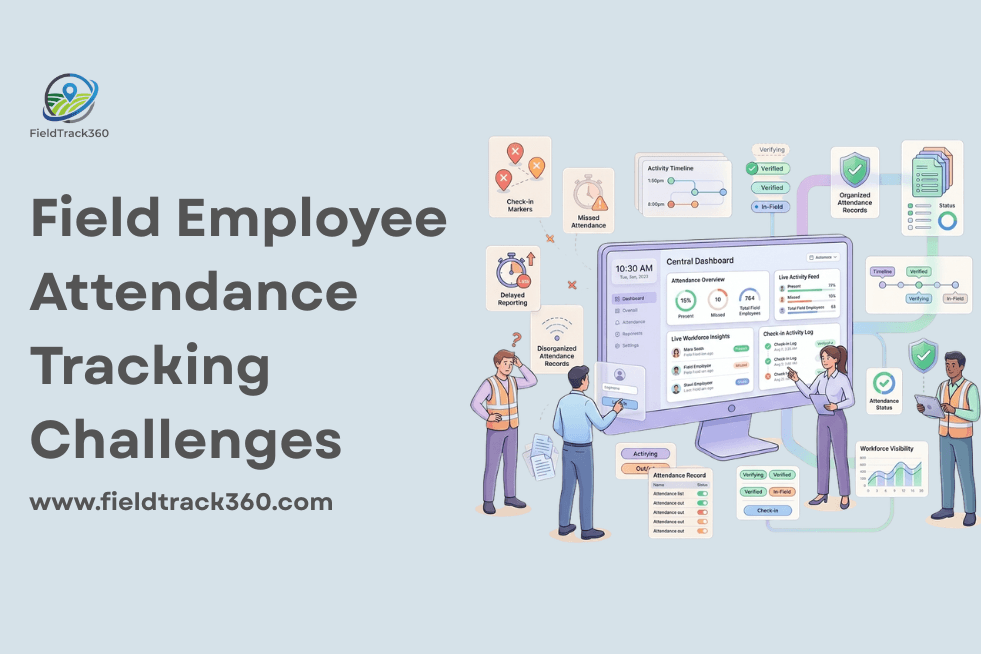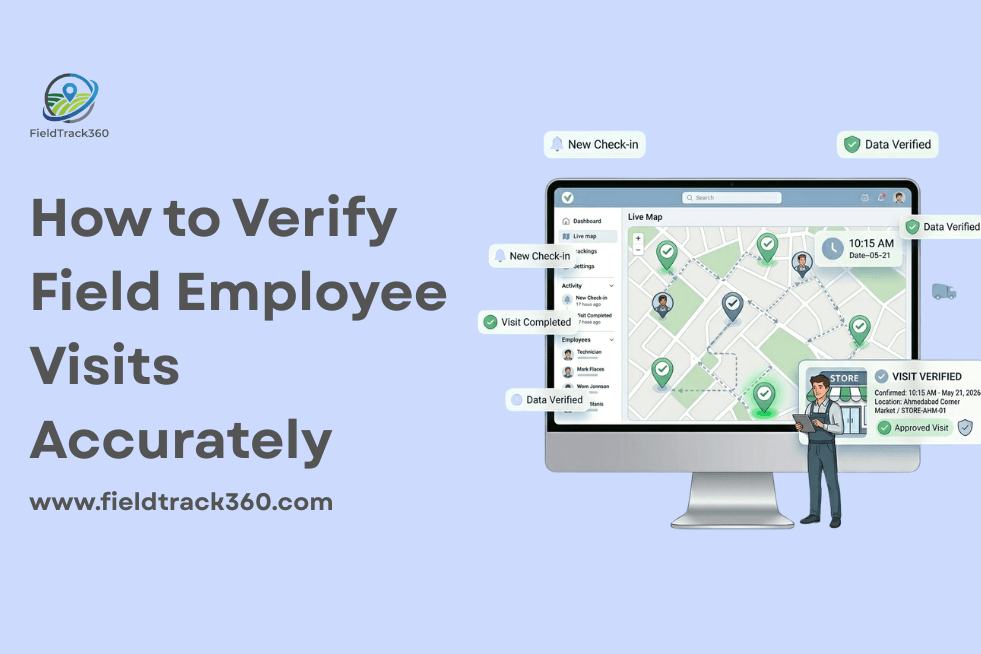
Tracking attendance accurately is essential for managing productive field teams. As businesses grow, many find that traditional attendance methods become harder to manage, leading them to explore GPS-based attendance solutions.
But is GPS attendance always the better choice? In this guide, we’ll compare GPS attendance vs manual attendance, explain the strengths and limitations of each approach, and help you decide which option best suits your field operations.
What Is Manual Attendance?
Manual attendance is the traditional method of recording employee working hours and attendance without using automated tracking technology. Businesses typically maintain attendance through paper registers, Excel spreadsheets, phone calls, WhatsApp messages, or manual check-ins recorded by supervisors.
For organizations with small teams or employees working from a single location, manual attendance can be a simple and cost-effective option. However, as field teams grow and employees begin working across multiple locations, maintaining accurate attendance records manually often becomes more challenging.
What Is GPS Attendance?
GPS attendance is a modern attendance tracking method that allows employees to mark their attendance using a mobile device while their location is automatically verified through GPS. Instead of relying on paper registers or manual records, businesses can capture attendance data digitally with accurate timestamps and location information.
This approach is especially useful for field teams that work across different locations, as it gives managers greater visibility into employee attendance while reducing manual record-keeping and improving overall accuracy.
GPS Attendance vs Manual Attendance: A Detailed Comparison
Both manual attendance and GPS attendance serve the same purpose, which is to record employee attendance. However, they differ significantly in terms of accuracy, efficiency, visibility, and ease of management. The table below highlights the key differences to help you determine which approach is better suited for your field team.
| Feature | Manual Attendance | GPS Attendance |
| Attendance Recording | Recorded manually using paper registers, spreadsheets, or phone calls | Recorded digitally through a mobile app with GPS verification |
| Location Verification | No way to verify where employees checked in | Automatically verifies the employee’s location during check-in |
| Accuracy | Higher risk of human errors and incorrect entries | More accurate with automated time and location records |
| Time Required | Requires manual updates and verification | Attendance is recorded instantly with minimal effort |
| Attendance Fraud | More vulnerable to proxy attendance and inaccurate reporting | Reduces the chances of fake or proxy check-ins through GPS verification |
| Reporting | Reports must be created manually | Attendance reports are generated automatically |
| Administrative Effort | Requires continuous monitoring and record management | Significantly reduces manual administrative work |
| Scalability | Suitable for smaller teams | Better suited for businesses managing multiple field employees across different locations |
| Best For | Small teams with simple attendance requirements | Growing businesses that require accurate, real-time attendance tracking |
Challenges of Manual Attendance for Field Teams
While manual attendance may work for smaller teams, it often becomes difficult to manage as field operations expand. Relying on paper registers, spreadsheets, or phone calls can make it challenging to maintain accurate records and monitor attendance across multiple locations.
Some of the most common challenges include:
- Increased chances of human errors and incorrect attendance records
- Difficulty verifying where and when employees actually checked in
- More time spent on attendance tracking and payroll preparation
- Limited visibility into real-time field employee attendance
- Higher risk of proxy attendance and inaccurate reporting
As businesses grow, these challenges can impact operational efficiency, making attendance management more time-consuming and less reliable.
Also read: Field Employee Attendance Tracking: Challenges, Solutions, and Best Practices
Benefits of GPS Attendance for Field Teams
GPS attendance helps businesses simplify attendance management by replacing manual processes with automated, location-verified check-ins. This not only improves record accuracy but also gives managers better visibility into their field workforce without increasing administrative effort.
Some of the key benefits include:
- Accurate attendance records with GPS-verified check-ins
- Real-time visibility into employee attendance and locations
- Reduced manual work for HR and operations teams
- Faster and more accurate payroll processing
- Better accountability across field teams
- Automatic attendance reports for easier monitoring and analysis
For businesses managing employees across multiple locations, GPS attendance provides a more efficient and reliable way to track attendance while reducing the challenges associated with manual record-keeping.
Also read: GPS Tracking for Field Employees: How It Works, Benefits, & Best Practices
When Is Manual Attendance Still a Good Choice?
Despite its limitations, manual attendance can still be a practical option for certain businesses. If your organization has a small team, operates from a single location, or doesn’t require real-time attendance tracking, maintaining attendance manually may be sufficient.
Manual attendance is often suitable when:
- You have a small workforce that is easy to manage.
- Employees work from a single office or fixed location.
- Attendance records are simple and don’t require detailed reporting.
- Your business has minimal field operations.
However, as your workforce expands and employees begin working across multiple locations, manual attendance can become increasingly difficult to manage. At that stage, businesses often start looking for a more efficient and scalable attendance tracking solution.
Signs It’s Time to Switch to GPS Attendance
As your field operations grow, managing attendance manually can become increasingly time-consuming and difficult to monitor. If your business is experiencing any of the following challenges, it may be the right time to consider switching to GPS attendance.
- Your field team is expanding across multiple locations.
- Managers find it difficult to verify employee attendance and locations.
- Payroll preparation takes longer because attendance records need manual verification.
- Attendance errors or proxy check-ins are becoming more frequent.
- You need real-time visibility into your field workforce.
- Generating attendance reports requires significant manual effort.
How FieldTrack360 Simplifies GPS Attendance
For businesses ready to move beyond manual attendance, FieldTrack360 provides a simple and reliable way to manage attendance for field teams. Employees can mark their attendance through the mobile app, while managers receive accurate attendance records with GPS-verified locations and timestamps.
In addition to GPS attendance, FieldTrack360 helps businesses manage day-to-day field operations with features such as live employee tracking, geo-fencing, visit management, task management, expense management, and automated reporting. Instead of relying on multiple tools or manual processes, businesses can manage their field workforce from a single platform.
If you’re looking for a smarter way to track attendance while improving visibility and operational efficiency, book a free demo to see how FieldTrack360 can support your field operations.