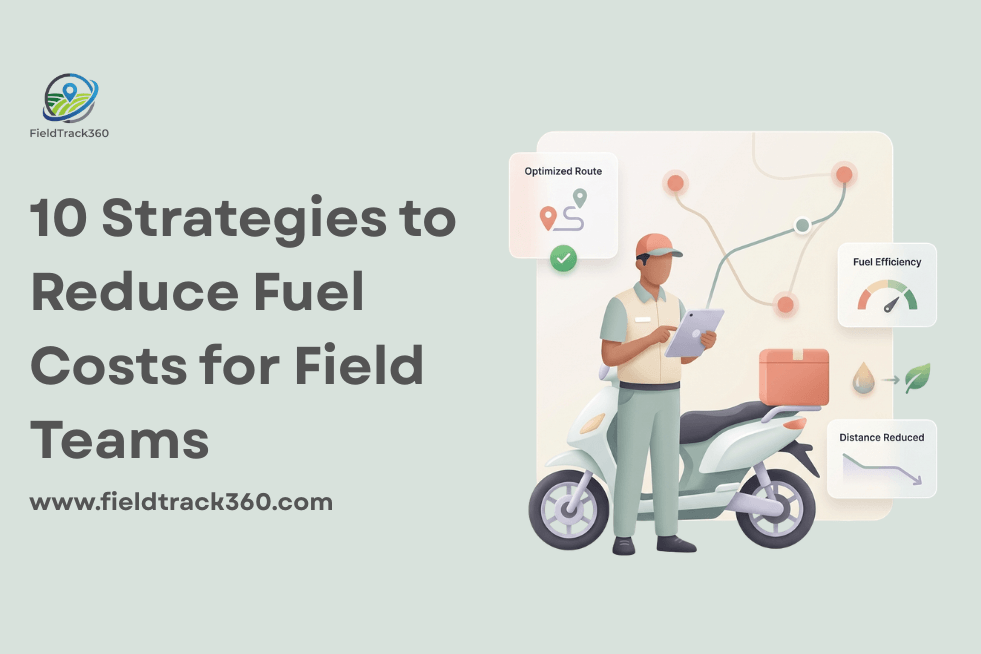
Fuel is one of the largest recurring expenses for businesses that manage field teams. Whether your employees travel to customer locations for sales, service, inspections, or deliveries, rising fuel costs can quickly impact your overall operating budget.
The good news is that reducing fuel costs isn’t just about spending less on fuel. It’s about improving route planning, reducing unnecessary travel, and managing field operations more efficiently. In this guide, we’ll share 10 practical strategies that can help lower fuel expenses while improving the productivity of your field team.
10 Practical Ways to Reduce Fuel Costs for Field Teams
Reducing fuel costs starts with improving how your field team operates each day. Here are 10 practical strategies that can help minimize unnecessary travel, improve efficiency, and lower fuel expenses.
1. Plan Smarter Routes Before Employees Leave
One of the easiest ways to reduce fuel costs is to plan employee routes before they start their day. Instead of assigning visits one by one, group nearby customer locations together and create the shortest possible travel route. This helps reduce unnecessary driving, saves time, and allows employees to complete more visits with less fuel.
Proper route planning also prevents overlapping territories and duplicate customer visits, which are common reasons for higher fuel consumption. Businesses that regularly review and improve territory coverage can reduce travel distances while making better use of their field workforce.
2. Track Field Employees in Real Time
Without real time visibility, it’s difficult to know whether employees are following planned routes or taking unnecessary detours. Tracking field employees in real time helps managers monitor travel, identify inefficient routes, and make quicker decisions when schedules or customer visits change.
Real time tracking also makes it easier to assign nearby jobs, reduce unnecessary travel, and improve overall field productivity. Combined with effective route planning, it can significantly lower fuel consumption while ensuring employees spend more time serving customers instead of driving between locations.
3. Reduce Unnecessary Vehicle Idling
Vehicle idling is often overlooked, but it can quietly increase fuel expenses over time. Whether employees leave the engine running while waiting for customers, during breaks, or at frequent stops, unnecessary idling leads to wasted fuel without adding any value to field operations.
Encourage employees to switch off the engine whenever they expect to be stationary for an extended period. Regularly reviewing travel patterns and idle time can also help identify opportunities to improve driving habits and reduce unnecessary fuel consumption across your field team.
4. Assign Jobs Based on Employee Location
Assigning jobs without considering an employee’s current location can result in unnecessary travel, increased fuel consumption, and longer response times. Instead, assign customer visits to the nearest available employee whenever possible. This reduces travel distance, improves productivity, and helps employees complete more visits in a day.
Location based task assignment also minimizes overlapping routes and prevents multiple employees from travelling to the same area unnecessarily. Over time, this simple practice can significantly reduce fuel costs while improving the overall efficiency of your field operations.
5. Verify Customer Visits Digitally
Missed or unverified customer visits often result in repeat trips, increasing both fuel costs and operational expenses. By digitally verifying customer visits, businesses can confirm that employees have visited the right location at the scheduled time, reducing the need for unnecessary follow-up travel.
Digital visit records also improve accountability and make it easier to review completed visits whenever required. This helps managers identify gaps in field operations, optimize future schedules, and avoid avoidable fuel expenses.
6. Improve Daily Field Planning
A well planned day helps field employees complete more visits while travelling fewer kilometres. Before the workday begins, organize customer visits based on priority, location, and appointment timings. This reduces unnecessary back and forth travel and makes better use of both employee time and fuel.
Daily planning also helps managers balance workloads across the team, avoid last minute schedule changes, and ensure employees follow a more efficient travel plan throughout the day.
7. Monitor Employee Travel Patterns
Regularly reviewing employee travel patterns can reveal opportunities to reduce unnecessary fuel consumption. By analyzing frequently travelled routes, repeated trips, and excessive travel distances, businesses can identify inefficiencies that may otherwise go unnoticed.
These insights make it easier to optimize future schedules, assign territories more effectively, and reduce avoidable travel. Over time, monitoring travel patterns helps businesses make smarter operational decisions that lower fuel costs and improve overall field efficiency.
8. Encourage Fuel Efficient Driving Habits
The way employees drive can have a direct impact on fuel consumption. Habits such as harsh acceleration, sudden braking, speeding, and unnecessary idling can increase fuel usage over time. Encouraging smoother driving practices helps improve fuel efficiency while also reducing wear and tear on company vehicles.
Simple initiatives such as driver awareness sessions, regular feedback, and monitoring driving behaviour can help employees develop better driving habits. Even small improvements, when adopted consistently across the team, can lead to noticeable savings in fuel costs.
9. Track Fuel and Travel Expenses
Reducing fuel costs starts with understanding where your money is being spent. By tracking fuel and travel expenses regularly, businesses can identify spending patterns, detect unusual claims, and uncover opportunities to reduce unnecessary travel.
Maintaining accurate expense records also helps managers compare travel costs across employees, evaluate the effectiveness of route planning, and make informed decisions to improve operational efficiency. Regular monitoring ensures that fuel saving efforts are measurable and sustainable over time.
10. Use Field Workforce Management Software
Managing field teams manually often leads to inefficient routes, delayed task assignments, limited visibility, and unnecessary travel. As your business grows, coordinating daily operations through phone calls, spreadsheets, or messaging apps becomes increasingly difficult and can contribute to higher fuel costs.
A field workforce management solution brings route planning, task assignment, employee tracking, attendance, visit management, and reporting into a single platform. With better visibility and streamlined operations, businesses can reduce unnecessary travel, improve productivity, and make more efficient use of fuel across their field teams.
How FieldTrack360 Helps Businesses Reduce Fuel Costs
Reducing fuel costs requires more than just asking employees to drive carefully. Businesses need better visibility into field operations, smarter planning, and the ability to monitor travel efficiently. This is where FieldTrack360 helps.
FieldTrack360 enables businesses to manage their entire field workforce from a single platform. With features like live GPS tracking, smart task assignment, geo-fencing, route history, GPS attendance, visit management, expense management, and automated reporting, businesses can reduce unnecessary travel and improve day to day operational efficiency.
Whether you’re managing a sales team, service engineers, or field executives, FieldTrack360 provides the insights needed to optimize routes, improve employee productivity, and control fuel expenses as your business grows.
If you’re looking for a smarter way to reduce fuel costs while improving field operations, book a free demo and see how FieldTrack360 can help your business.
Ready to Reduce Fuel Costs Across Your Field Team?
Cut unnecessary travel, improve route planning, monitor field activities in real time, and manage your entire field workforce from one platform with FieldTrack360.
Book a Free Demo