Managing field employees becomes increasingly difficult as business operations grow across multiple locations. What may initially seem manageable through calls, spreadsheets, and manual updates can quickly turn into a time-consuming process with limited visibility into daily field activities.
Many businesses struggle to track employee movement, verify attendance, confirm client visits, and maintain accurate reporting across field operations. As teams expand, these operational challenges often lead to delays, communication gaps, inconsistent reporting, and reduced accountability.
In many cases, businesses do not realize these issues until manual processes begin affecting overall efficiency and operational control.
This is where field employee tracking software becomes important.
By improving visibility into field activities and automating key operational processes, field employee tracking software helps businesses manage field teams more accurately and efficiently.
In this article, we will explore some of the common signs that indicate your business may need field employee tracking software.
10 Signs Your Business Needs Field Employee Tracking Software
As field operations grow, businesses often begin facing operational challenges that become difficult to manage through manual processes alone. Limited visibility, delayed updates, inconsistent reporting, and increasing coordination effort are some of the common indicators that existing systems may no longer be efficient enough for managing field activities.
Recognizing these challenges early can help businesses improve operational control, strengthen accountability, and create more structured field workflows.
Below are some common signs that indicate your business may benefit from a more centralized field tracking system.
1. You Have Limited Visibility Into Field Activities
Managing field teams becomes difficult when there is little real-time visibility into daily activities. Managers may struggle to track employee movement, monitor ongoing tasks, or confirm whether assigned visits have been completed.
As a result, businesses often depend heavily on calls, messages, or manual updates to stay informed about field operations.
Using a centralized tracking system can help improve visibility by providing more accurate and organized updates across field activities.
2. Attendance Tracking Is Becoming Difficult
Tracking attendance manually can become unreliable when employees work across multiple locations during the day. Businesses may experience delayed check-ins, inaccurate records, or difficulty verifying attendance consistently.
As field operations expand, these manual processes often require additional coordination and verification effort.
Location-based attendance systems help businesses maintain more accurate attendance records while reducing dependency on manual verification methods.
3. Your Team Relies Too Much on Calls and Manual Updates
Many businesses still manage field operations through phone calls, spreadsheets, or messaging apps. While these methods may work initially, they often become inefficient as teams and operations grow.
Constant follow-ups can slow down coordination, create communication gaps, and make daily operations harder to manage efficiently.
Modern tracking solutions help centralize updates and improve visibility into field activities without relying entirely on manual communication.
4. Field Visit Verification Is Inconsistent
Verifying whether field visits actually happened can become difficult when businesses rely only on manual updates or self-reported activity logs. In many cases, managers may not have a reliable way to confirm whether employees reached assigned locations or completed scheduled visits.
This often creates reporting inconsistencies and reduces overall accountability across field operations.
Location-based tracking systems help businesses maintain more accurate visit records by improving visibility into employee movement and on-ground activities.
5. Reporting Delays Are Affecting Operations
Delayed reporting can make it difficult for businesses to maintain clear visibility into daily field activities. When updates are submitted hours later or at the end of the day, managers may struggle to respond quickly to operational issues or changing priorities.
Over time, these delays can affect decision-making, coordination, and overall operational efficiency.
Using real-time activity tracking and centralized reporting systems helps businesses receive faster updates and maintain better control over field operations.
6. Managing Growing Field Teams Is Becoming Difficult
As field teams expand across multiple locations, managing daily operations manually becomes increasingly complex. Coordinating attendance, tracking activities, verifying visits, and maintaining communication across larger teams can quickly create operational bottlenecks.
Without structured systems in place, businesses may struggle to maintain consistency and visibility across field operations.
Centralized field management tools help businesses organize activities more efficiently and maintain better operational control as teams continue to grow.
7. You Are Struggling to Measure Field Employee Productivity
Measuring productivity in field operations can be difficult when businesses have limited visibility into employee activities and daily progress. Without structured tracking, managers may find it challenging to understand how time is being utilized across field tasks and client visits.
This lack of visibility can make performance evaluation and operational planning less effective.
Activity tracking and reporting systems help businesses gain clearer insights into field operations, making it easier to monitor productivity and identify areas that need improvement.
8. Manual Processes Are Consuming Too Much Time
Managing field operations through spreadsheets, phone calls, and manual reporting often requires significant time and coordination effort. As daily activities increase, these processes can become difficult to manage consistently and may slow down overall operations.
Managers may spend more time collecting updates and verifying activities instead of focusing on operational improvements and decision-making.
Automated tracking and centralized reporting systems help reduce manual workload by organizing field activities more efficiently and improving access to real-time information.
9. Accountability Across Field Operations Is Weak
Maintaining accountability becomes difficult when field activities are not tracked consistently or verified properly. Incomplete updates, unclear reporting, and limited visibility into daily operations can create uncertainty around task completion and employee activities.
Over time, this can affect operational transparency and make it harder for managers to maintain consistent field processes.
Structured tracking systems help businesses improve accountability by maintaining clearer activity records and providing better visibility into field operations.
10. Your Business Needs Better Operational Visibility
As field operations grow, businesses need faster access to accurate operational information to manage teams efficiently. Without clear visibility into employee activities, attendance, field visits, and ongoing tasks, decision-making often becomes slower and less effective.
Limited operational visibility can also make it harder to identify inefficiencies, monitor field performance, and maintain consistency across daily operations.
Centralized tracking and reporting systems help businesses gain better visibility into field activities, allowing managers to make more informed operational decisions and improve overall workflow management.
How Field Employee Tracking Software Helps Solve These Challenges
As field operations become more complex, businesses need structured systems that improve visibility, reduce manual coordination, and simplify day-to-day management. Relying entirely on calls, spreadsheets, or delayed updates often makes it difficult to maintain operational consistency across growing field teams.
This is where modern field tracking solutions help businesses manage operations more efficiently.
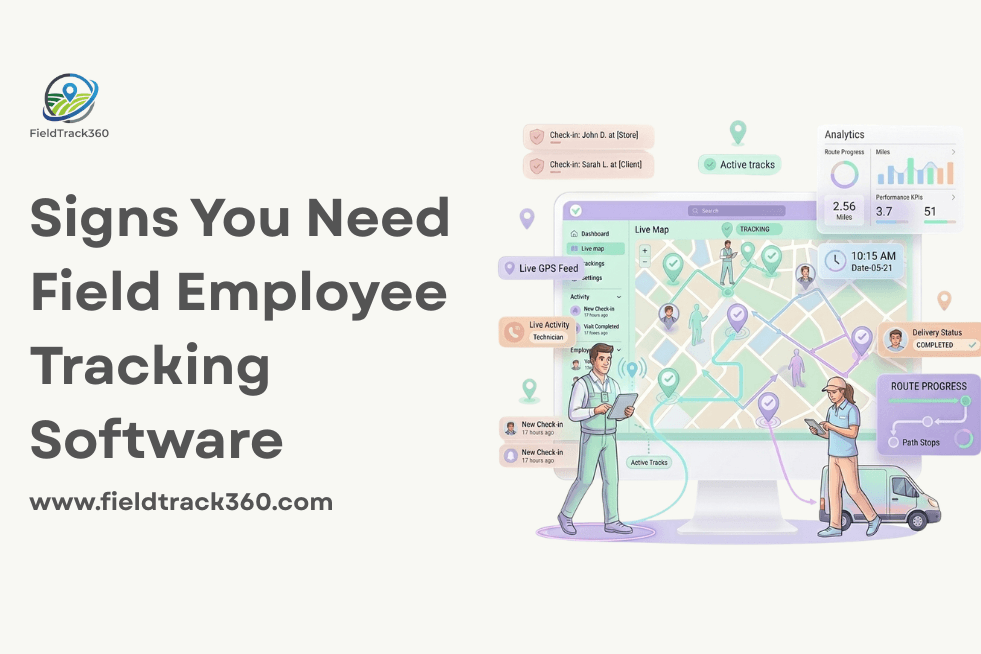
Features such as GPS-based tracking, geo-fencing, location-based attendance, and centralized reporting help businesses gain better visibility into field activities and maintain more accurate operational records.
These systems also help reduce reporting delays, improve visit verification, strengthen accountability, and simplify coordination across distributed teams.
By automating key operational processes and improving access to real-time information, businesses can manage field activities more effectively while reducing dependency on manual workflows.
How FieldTrack360 Helps Businesses Manage Field Operations More Efficiently
Managing field operations becomes easier when businesses have access to real-time visibility, structured reporting, and location-based activity tracking. Instead of relying heavily on manual coordination, businesses can use centralized systems to improve operational control and simplify field management processes.
FieldTrack360 helps businesses manage field operations more efficiently through features such as GPS tracking, geo-fencing, location-based attendance, and real-time activity monitoring.
By improving visibility into field activities and reducing dependency on manual reporting, businesses can maintain more accurate operational records, improve accountability, and streamline daily field operations.
This helps teams stay more organized while enabling managers to make faster and more informed operational decisions.
Final Thoughts
Many businesses continue managing field operations manually until operational challenges begin affecting productivity, visibility, and overall efficiency. As field teams grow, processes such as attendance tracking, visit verification, reporting, and daily coordination often become more difficult to manage consistently.
Recognizing these challenges early can help businesses improve operational control and create more structured field workflows.
By using centralized tracking systems and real-time operational visibility tools, businesses can reduce manual workload, improve accountability, and manage field operations more efficiently.
Looking to Improve Your Field Operations?
If your business is facing challenges with field activity tracking, attendance management, or operational visibility, you can connect with our team to explore how FieldTrack360 can help.