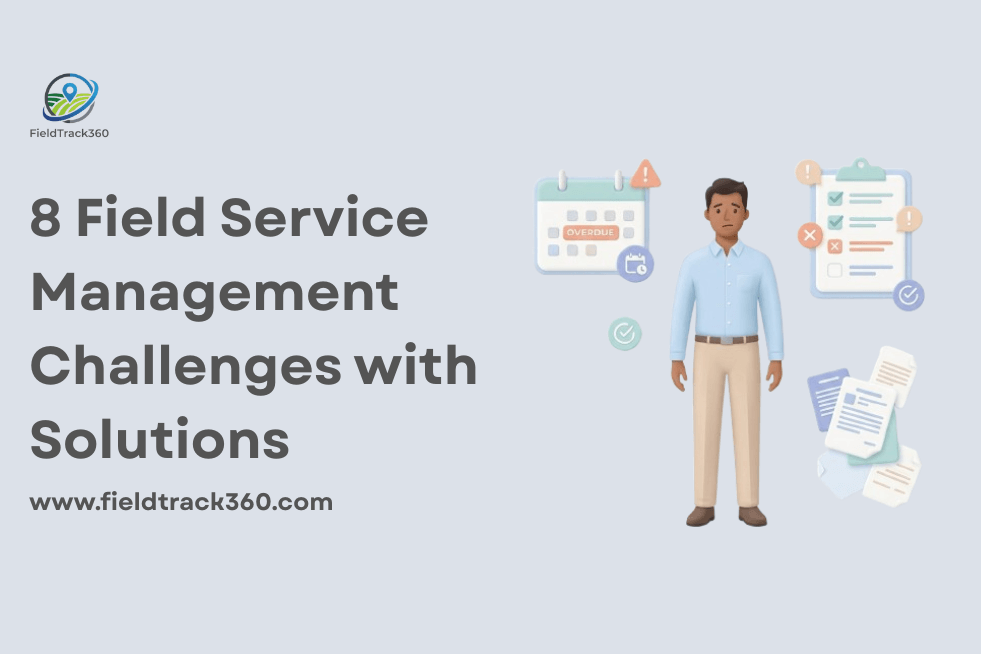
Managing a field service team can become difficult when employees are working across different customer locations throughout the day. Scheduling visits, tracking field activity, managing travel, and keeping office teams updated can create several operational challenges.
These field service management challenges can lead to missed visits, wasted travel time, poor attendance visibility, delayed updates, and higher operating costs. Without the right processes, managers may also struggle to understand what is happening in the field until the working day is over.
The good news is that many of these challenges can be addressed with better planning, real time visibility, and centralised field activity tracking. In this guide, we will look at eight common field service management challenges and practical ways businesses can solve them.
Common Field Service Management Challenges with Solutions
1. Inefficient Scheduling and Field Visit Planning
One of the biggest field service management challenges is creating a schedule that field employees can actually complete. When too many visits are assigned to one day, or appointments are planned without enough time for travel and customer interactions, delays can quickly build up.
A better approach is to plan visits based on employee availability, customer priority, location, travel time, and expected visit duration. Keep some flexibility in the schedule for unexpected delays or urgent service requests.
This gives field employees a clearer plan for the day and helps managers reduce scheduling conflicts, delayed visits, and unfinished work.
2. Lack of Real Time Visibility Into Field Teams
When field employees are working across multiple customer locations, managers cannot always know where they are, whether they have started their assigned work, or if they are running behind schedule. Relying on phone calls or end of day updates can make it difficult to respond when something goes wrong.
Real time visibility helps managers see field activity as it happens. They can identify delays, check employee locations, and understand whether planned visits or tasks are progressing as expected.
Businesses can address this challenge by using GPS tracking to give managers a live view of field employees during working hours. This reduces the need for constant manual updates and helps managers make quicker decisions when schedules change.
3. Inefficient Routes and High Travel Time
Poorly planned routes can cause field employees to spend more time travelling than serving customers. Unnecessary backtracking, long distances between visits, and traffic delays can make it difficult to complete all planned work during the day.
Businesses can reduce this problem by grouping nearby customer visits and planning routes based on location and expected travel time. Reviewing route history can also help managers identify areas where employees regularly spend too much time on the road.
Better route planning helps field teams reduce unnecessary travel, complete more visits, and make better use of their working hours.
4. Missed or Unverified Customer Visits
Field service teams can lose valuable time when planned customer visits are missed or marked as completed without enough information. Managers may only discover these gaps after the working day, making it harder to follow up with customers or reschedule the visit.
A simple check in and check out process can make visits easier to track. Location based verification can also help confirm that an employee was at the expected customer location when the visit was recorded.
Businesses can also follow a clear process to reduce missed customer visits, including better scheduling, route planning, and timely follow ups when a visit is not completed.
Keeping a clear record of completed and missed visits helps managers identify gaps quickly and take action before they affect customer coverage.
5. Poor Field Attendance and Workforce Accountability
Managing attendance becomes more difficult when employees work outside the office. Manual attendance records or updates through calls and messages can make it difficult to know when employees actually started their field work and whether they followed their assigned schedules.
GPS based attendance can help businesses record employee check in and check out based on their location. Managers can also review attendance records alongside field activity to identify repeated late starts, early check outs, or gaps in daily activity.
A clear attendance process gives managers better visibility into workforce availability and helps field employees stay accountable for their working hours.
6. Communication Gaps Between Office and Field Teams
Field employees often need to share updates about customer visits, delays, completed tasks, or changes to their schedules. When these updates depend on calls, messages, or manual reporting, important information can be delayed or missed.
A central system for field activity can make communication easier by keeping task assignments, visit updates, attendance records, and field activity information in one place. Managers can see the latest updates without having to contact each employee individually.
Clear and timely field updates help office teams respond faster when plans change and keep daily field operations better coordinated.
7. Manual Reporting and Limited Field Data
Manual field reports can take considerable time to prepare and may not always provide managers with complete or timely information. When updates are collected through spreadsheets, calls, or messages, it can be difficult to get a clear view of daily field activity.
A central reporting system can bring attendance, customer visits, tasks, routes, and other field activities into one place. Managers can review this information regularly to understand what has been completed, where delays are occurring, and which areas need attention.
Using field activity reports also helps businesses make decisions based on actual field data instead of relying only on employee updates or assumptions.
8. Rising Field Operating Costs
Field operations can become expensive when employees spend too much time travelling, routes are poorly planned, or daily activities are not properly monitored. Fuel, travel, overtime, and other field expenses can increase when these inefficiencies continue over time.
Businesses can control these costs by improving route planning, reducing unnecessary travel, monitoring field activity, and reviewing expense data regularly. Comparing planned activities with actual field activity can also help managers identify where time and resources are being wasted.
Keeping track of these factors helps businesses reduce avoidable field operating costs while improving the overall efficiency of their field teams.
How FieldTrack360 Helps Solve Field Service Management Challenges
FieldTrack360 brings field employee tracking, attendance, visits, routes, tasks, and activity reporting into one platform. This helps businesses manage many of the day to day challenges that come with coordinating field teams.
Managers can track employee locations in real time, review route history, assign tasks and visits, and monitor field activity throughout the day. GPS based attendance and visit check-ins also provide clearer records of employee activity and customer visits.
The platform also helps businesses review field data through reports, identify operational gaps, and improve scheduling and route planning based on actual activity. This can help reduce unnecessary travel, improve workforce accountability, and keep field operations better organised.
For businesses managing sales representatives, service teams, delivery staff, or other employees working outside the office, FieldTrack360 provides a central way to manage daily field operations.
Ready to Simplify Field Service Management?
Manage field employees, track daily activity, monitor routes, and keep your field operations organised with FieldTrack360.
Book a Free Demo