Managing field employees is very different from managing office teams. When employees are constantly on the move, visiting clients, handling deliveries, or working on-site, it becomes difficult to understand how work is actually being done during the day.
Many businesses face common challenges such as unclear task execution, delays in updates, and limited visibility into daily activities. Managers often rely on calls or end-of-day reports, which do not always provide a complete or accurate picture. As a result, it becomes harder to measure performance or identify areas for improvement.
Improving field employee performance is not just about working harder. It requires better systems, clearer processes, and access to the right data. When businesses have visibility into what is happening on the ground, they can make informed decisions and help their teams perform more effectively.
In this guide, you will learn practical and proven strategies that businesses can use to improve field employee performance. These approaches focus on real operational challenges and provide solutions that are easy to implement and scale.
What Affects Field Employee Performance?
Before improving performance, it is important to understand what actually affects it. In field operations, performance issues are rarely caused by a lack of effort. In most cases, they are the result of gaps in visibility, planning, and execution.
When these gaps are not addressed, even experienced teams struggle to perform consistently. Here are the key factors that directly impact field employee performance:
Lack of Real Time Visibility
One of the biggest challenges is not knowing what is happening on the ground during working hours. Managers often have limited insight into where employees are or how tasks are progressing.
Without visibility:
- Delays go unnoticed
- Missed visits are harder to track
- Support cannot be provided on time
This makes it difficult to manage performance effectively.
Unclear Task Planning
When tasks are not clearly defined, employees may not know what is expected of them. This can lead to confusion, missed priorities, or incomplete work. For example, if a field employee has multiple visits planned but no clear order or instructions, it can reduce efficiency and impact overall output.
Inefficient Travel and Time Usage
Field employees spend a large part of their day traveling. If routes are not planned properly or time is not managed well, a significant portion of the workday can be lost in transit. This results in:
- Fewer tasks completed per day
- Increased operational costs
- Reduced productivity
Dependence on Manual Reporting
Manual updates and end-of-day reports often create delays in information flow. By the time managers receive updates, it is too late to make any real-time improvements. This also affects accuracy, as reports may not capture every detail of the day.
Lack of Performance Data
Without structured data, it becomes difficult to measure how employees are performing. Businesses cannot clearly identify:
- Which employees are performing well
- Where improvements are needed
- How tasks and time are being utilized
This limits the ability to make informed decisions.
Field employee performance is influenced by multiple operational factors, not just individual effort. When businesses address these gaps with the right systems and processes, they create an environment where employees can perform at their best.
10 Proven Strategies to Improve Field Employee Performance
Improving field employee performance requires more than just setting targets or increasing supervision. It involves creating systems that give clarity, reduce inefficiencies, and help employees focus on the right work. Below are ten practical strategies that businesses can implement to improve performance in a structured and sustainable way.
1) Improve Visibility with Real-Time Tracking
One of the biggest barriers to performance is the lack of visibility. When managers do not have a clear view of field activities, it becomes difficult to guide teams effectively.
Using a system that provides real time updates helps managers understand where employees are and how work is progressing. This allows quicker decision making and better coordination throughout the day.
2) Set Clear Daily Tasks and Expectations
Performance improves when employees know exactly what they need to do. Unclear instructions often lead to confusion and missed priorities. Defining tasks clearly at the start of the day ensures that employees can plan their work better and stay focused on completing the most important activities.
3) Optimize Travel and Routes
Travel time is a major part of field work. If not managed properly, it can reduce the number of tasks completed in a day. By planning routes efficiently and assigning tasks based on location, businesses can help employees cover more ground in less time and improve overall productivity.
4) Reduce Time Spent on Manual Reporting
When employees spend a significant part of their day preparing reports, it takes time away from actual work. Automating reporting processes allows employees to focus on their core responsibilities while ensuring that managers still receive accurate and timely updates.
5) Track Time Spent on Tasks
Understanding how much time is spent on each task can reveal important insights. Some activities may take longer than expected, while others may be completed quickly. Tracking this information helps businesses identify inefficiencies and adjust planning accordingly.
6) Use Data to Measure Performance
Performance should be measured using clear and consistent data. Relying on assumptions or incomplete reports makes it difficult to evaluate employees fairly. With proper data, managers can identify high performers, understand gaps, and take steps to improve overall team performance.
7) Build Accountability Through Transparency
When there is a structured system in place, employees are more aware of their responsibilities. This creates a sense of accountability and encourages timely task completion. Transparency also reduces misunderstandings and improves trust between managers and field teams.
8) Provide Regular Feedback and Support
Performance improvement is an ongoing process. Employees benefit from regular feedback that helps them understand what they are doing well and where they can improve. Using real data makes feedback more meaningful and actionable.
9) Standardize Field Operations
Having a consistent process for task execution, reporting, and communication helps reduce confusion and errors. Standardization ensures that all employees follow the same approach, which improves efficiency and makes it easier to manage larger teams.
10) Use the Right Tools to Support Your Team
Technology plays a key role in improving field performance. The right tools can bring together tracking, task management, and reporting into one system. When businesses use a reliable solution, they reduce manual effort, improve accuracy, and create a more structured way of managing operations.
These strategies are most effective when implemented together. Improving visibility, optimizing processes, and using the right tools creates a strong foundation for better performance.
How Technology Helps Improve Field Employee Performance
While the strategies discussed earlier focus on improving processes, implementing them effectively often requires the right technology. Managing visibility, tasks, and reporting manually becomes difficult as teams grow and operations become more complex.
This is where technology plays an important role by bringing everything into one connected system.
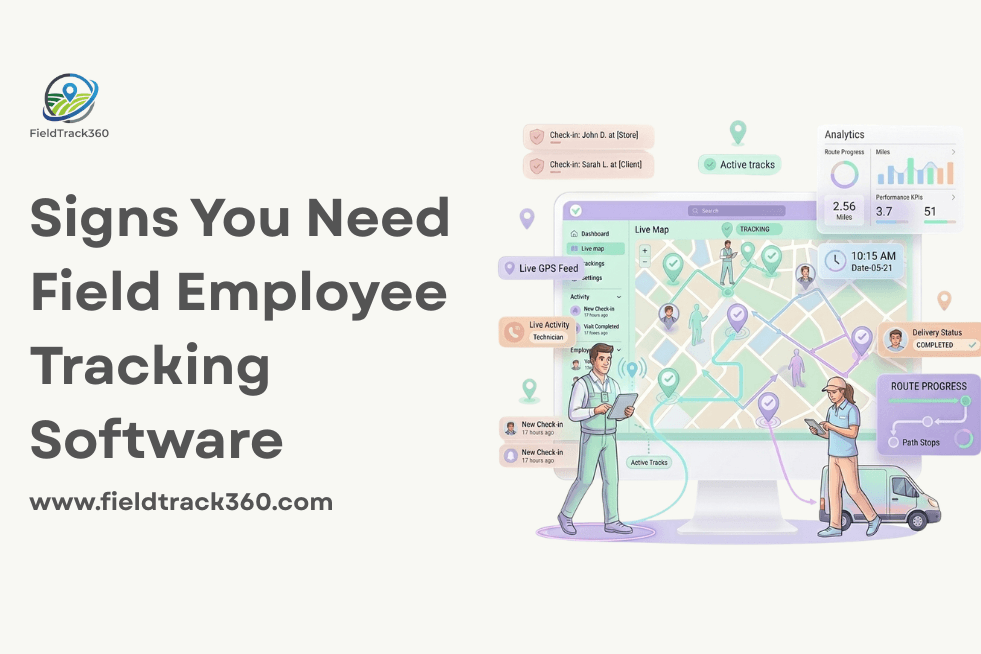
A field employee tracking software helps businesses move from scattered processes to a more structured approach. Instead of relying on multiple tools or manual updates, managers can access all relevant information in one place.
For example, real time location visibility allows managers to understand where employees are and how tasks are progressing without constant follow ups. Task management features ensure that work is clearly assigned and tracked, reducing confusion and missed activities. At the same time, automated reporting removes the need for manual updates and provides accurate insights into daily performance.
When these elements work together, businesses can:
- Monitor field activities with clarity
- Improve coordination between teams
- Identify and fix inefficiencies faster
- Make decisions based on real data
More importantly, technology reduces the operational burden on both managers and employees. Employees spend less time reporting and more time completing tasks, while managers get reliable information without chasing updates.
Over time, this creates a more efficient system where performance improvement is not dependent on constant supervision, but supported by clear processes and accurate data.
Final Thoughts
Improving field employee performance is not about increasing pressure or setting more targets. It is about creating the right environment where employees have clarity, structured processes, and the support they need to perform effectively.
When businesses focus on improving visibility, optimizing daily operations, and using data to guide decisions, performance improvements become more consistent and measurable. Small changes in how tasks are planned, tracked, and executed can lead to significant gains over time.
As field operations grow, relying on manual methods makes it harder to maintain efficiency. Adopting a more structured approach, supported by the right tools, helps businesses manage teams with better control and confidence.
Want to Improve Your Field Team Performance?
If you are looking to improve how your field teams operate, the right system can make a meaningful difference. With a solution like FieldTrack360, you can:
- Track daily activities with better visibility
- Simplify task management
- Improve productivity across teams
- Reduce manual effort and reporting gaps
If you’re looking to improve your field team performance, you can book a demo by contacting our team to get started.